
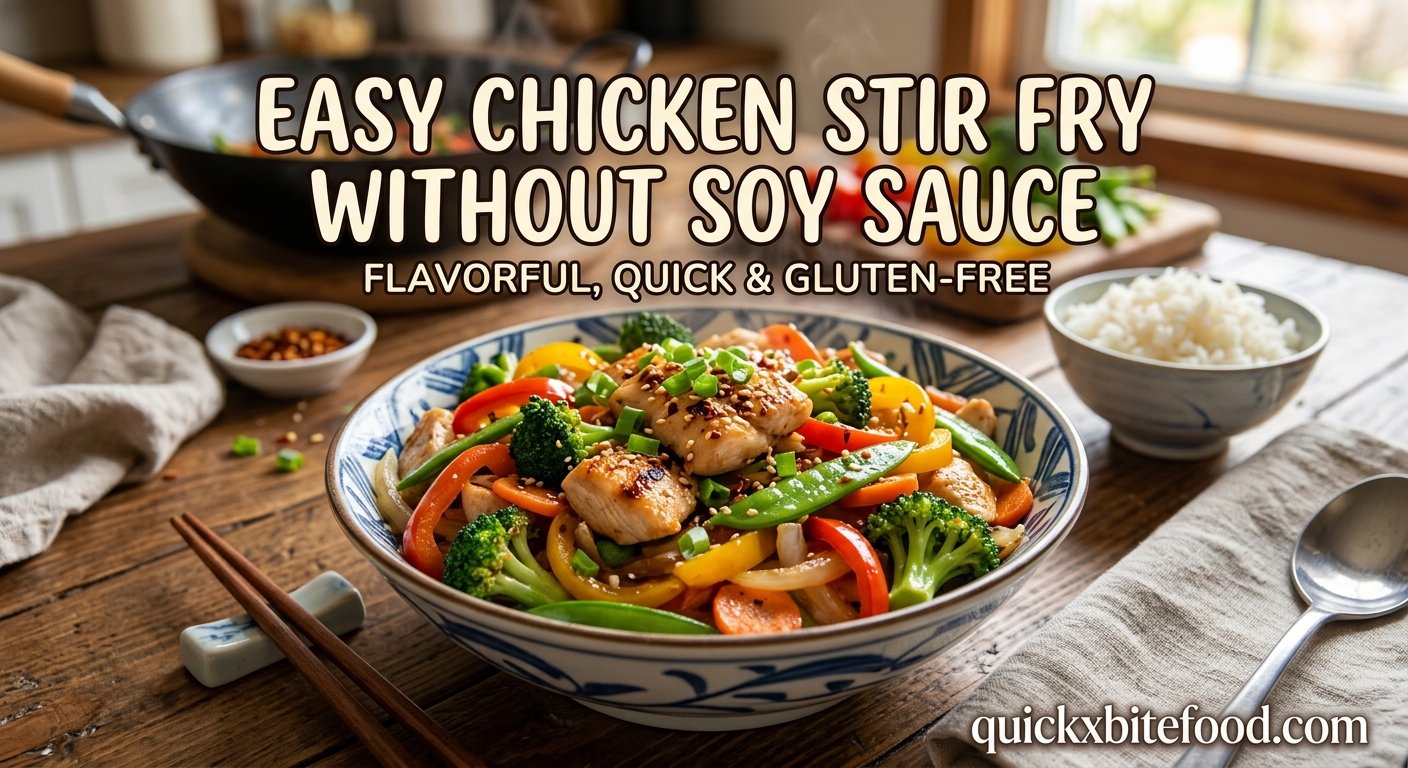
Easy Chicken Stir Fry Without Soy Sauce
If you love a quick, flavorful stir fry but do not have soy sauce on hand—or simply want to avoid it—this easy chicken stir fry without soy sauce is a recipe worth keeping. It is colorful, satisfying, and packed with tender chicken and crisp vegetables, all coated in a savory homemade sauce that does not depend on traditional soy sauce.
The best part is how simple this chicken stir fry is to make. You can have dinner on the table in about 30 minutes, making it perfect for busy weeknights when you want something homemade without spending hours in the kitchen.
Instead of soy sauce, this recipe uses a combination of ingredients such as garlic, ginger, lemon juice, honey, broth, and a few basic seasonings to create a sauce that is savory, slightly sweet, tangy, and incredibly delicious. You can also change the vegetables depending on what you already have in your refrigerator.
Whether you are avoiding soy, ran out of soy sauce, or just want a lighter homemade alternative, this easy chicken stir fry without soy sauce delivers plenty of flavor.
Why You Will Love This Chicken Stir Fry
There are plenty of reasons to make this recipe. First, it is fast. Chicken cooks quickly when sliced into thin strips, and vegetables only need a few minutes in a hot skillet.
It is also flexible. You do not need a specific collection of vegetables to make a great stir fry. Bell peppers, carrots, broccoli, onions, zucchini, mushrooms, green beans, and cabbage all work beautifully.
Most importantly, you will not miss the soy sauce.
The homemade sauce brings together several simple flavors. Garlic adds savory depth, ginger provides warmth, lemon juice gives the sauce brightness, and honey balances everything with a touch of sweetness. Chicken broth helps create a smooth sauce that coats every piece of chicken and vegetable.
This recipe is also ideal for meal prep. Make a larger batch and serve the leftovers with rice, noodles, or even a simple salad.
Ingredients You Will Need
The ingredient list for this chicken stir fry without soy sauce is straightforward.
For the Chicken
- 1 pound boneless, skinless chicken breast or thighs
- 1 tablespoon cooking oil
- 1/2 teaspoon salt
- 1/2 teaspoon black pepper
- 1/2 teaspoon garlic powder
- 1/2 teaspoon paprika
- 1 tablespoon cornstarch, optional
Cornstarch is optional, but it helps give the chicken a lightly crisp exterior while keeping the inside tender.
For the Vegetables
You can use whatever vegetables you enjoy or already have available. A simple combination includes:
- 1 bell pepper, sliced
- 1 small broccoli head, cut into small florets
- 1 carrot, thinly sliced
- 1/2 onion, sliced
- 1 cup sliced mushrooms
You can also add zucchini, cabbage, snow peas, green beans, or baby corn.
For the Soy-Free Sauce
- 1/2 cup chicken broth
- 1 tablespoon honey or maple syrup
- 1 tablespoon lemon juice
- 1 tablespoon rice vinegar or apple cider vinegar
- 2 cloves garlic, minced
- 1 teaspoon fresh grated ginger
- 1 teaspoon sesame oil, optional
- 1 teaspoon cornstarch
- 1/4 teaspoon black pepper
If you want a stronger garlic flavor, add another clove of garlic. If you prefer a sweeter sauce, increase the honey slightly.
How to Make Easy Chicken Stir Fry Without Soy Sauce
The process is simple, but a few small details can make a big difference.
1. Prepare the Chicken
Start by cutting the chicken into thin, bite-sized strips. Try to keep the pieces similar in size so they cook evenly.
Place the chicken in a bowl and season it with salt, black pepper, garlic powder, and paprika.
If using cornstarch, sprinkle it over the chicken and toss everything together until the pieces are lightly coated.
Do not cut the chicken into large chunks. Thin strips cook much faster and work better in a stir fry because they can quickly absorb the sauce.
2. Mix the Sauce
In a small bowl, whisk together the chicken broth, honey, lemon juice, vinegar, minced garlic, ginger, sesame oil, black pepper, and cornstarch.
Make sure the cornstarch is fully mixed into the liquid. This will help thicken the sauce later.
Taste the sauce before adding it to the pan. If you want it sweeter, add a little more honey. If you prefer more tang, add another small splash of lemon juice or vinegar.
3. Cook the Chicken
Heat a large skillet or wok over medium-high heat.
Add the oil and allow it to become hot. Add the seasoned chicken in a single layer.
Cook for about 3 to 5 minutes per side, depending on the thickness of the pieces. The chicken should be golden on the outside and cooked through.
Avoid overcrowding the pan. If all the chicken does not fit comfortably, cook it in two batches.
Once cooked, transfer the chicken to a clean plate.
4. Cook the Vegetables
Add the sliced onion, carrots, broccoli, and bell pepper to the same skillet.
Cook the vegetables for approximately 4 to 6 minutes. Stir frequently so they cook evenly.
The goal is to keep the vegetables slightly crisp rather than making them soft and mushy.
If the pan looks dry, add a small splash of water or broth.
Add mushrooms or softer vegetables toward the end because they cook faster.
5. Add the Chicken Back
Return the cooked chicken to the skillet with the vegetables.
Give the sauce another quick stir because the cornstarch may have settled at the bottom of the bowl.
Pour the sauce over the chicken and vegetables.
Stir everything together and cook for another 2 to 3 minutes.
The sauce will gradually thicken and coat the chicken and vegetables.
Once everything looks glossy and well coated, remove the skillet from the heat.
What Makes This Stir Fry Different?
Traditional stir fry sauces often depend heavily on soy sauce for saltiness and umami. This recipe takes a different approach.
The combination of garlic, ginger, broth, vinegar, lemon juice, and honey creates multiple layers of flavor. You get savory notes from the broth, brightness from the acid, sweetness from honey, and warmth from ginger and garlic.
The result is not meant to taste exactly like a traditional soy sauce-based stir fry. Instead, it is its own delicious version that lets the chicken and vegetables shine.
If you have been searching for a chicken stir fry without soy sauce, this is a great starting point because you can easily adjust the sauce to suit your taste.
Best Vegetables for Chicken Stir Fry
One of the easiest things about stir fry recipes is their flexibility.
Bell Peppers
Red, yellow, orange, or green bell peppers add sweetness, color, and crunch.
Broccoli
Broccoli is excellent in stir fry because its small florets catch the sauce.
Carrots
Thinly sliced carrots provide natural sweetness and a pleasant crunch.
Mushrooms
Mushrooms add a rich, savory flavor and make the stir fry feel more substantial.
Onions
Yellow, white, or red onions all work well. They become slightly sweet as they cook.
Zucchini
Zucchini cooks quickly and works especially well when sliced into thin half-moons.
Cabbage
Shredded cabbage is an inexpensive way to add plenty of vegetables to the dish.
You do not have to use all of these. Two or three vegetables are enough for a delicious weeknight stir fry.
How to Make the Chicken Extra Tender
Chicken breast can become dry if it is overcooked. To keep it juicy, start with thin, evenly sliced pieces.
Cooking the chicken over medium-high heat also helps create a flavorful exterior without requiring a long cooking time.
A small amount of cornstarch can also help. It creates a light coating around the chicken and gives it a pleasant texture once cooked.
Chicken thighs are another excellent choice. They contain more fat than chicken breast and are naturally forgiving if they cook for an extra minute or two.
Can You Make This Recipe Without Cornstarch?
Absolutely.
Cornstarch helps thicken the sauce, but it is not essential. If you do not have it, simply simmer the sauce for an extra minute or two.
You can also use arrowroot powder if that is what you have available.
Without a thickener, the sauce will be thinner, but it will still taste delicious.
How to Make It Spicy
If you enjoy spicy food, there are several easy ways to add heat.
Add a pinch of red pepper flakes to the sauce, or include a finely chopped fresh chili while cooking the vegetables.
You can also add a small amount of hot sauce to the finished stir fry.
For a milder version, leave the chili out completely. The garlic and ginger provide plenty of flavor without making the dish spicy.
What to Serve With Chicken Stir Fry
This easy chicken stir fry without soy sauce is delicious on its own, but it becomes a complete meal when served with a simple side.
Steamed Rice
White rice is one of the easiest choices. Basmati, jasmine, or long-grain rice all work well.
Brown Rice
For a heartier meal, serve the stir fry over brown rice.
Noodles
Egg noodles, rice noodles, or regular wheat noodles can turn this recipe into a satisfying noodle stir fry.
Cauliflower Rice
If you want more vegetables, serve the chicken stir fry over cauliflower rice.
Quinoa
Cooked quinoa provides another simple base and adds a slightly nutty flavor.
Tips for the Best Chicken Stir Fry
A few simple techniques can make your stir fry even better.
Use a large pan. A large skillet or wok gives the ingredients enough room to cook rather than steam.
Preheat the pan. Starting with a hot pan helps the chicken develop a golden exterior.
Do not overcrowd the chicken. Cook it in batches if necessary.
Prepare everything before cooking. Stir frying moves quickly, so chop your vegetables and mix the sauce before turning on the stove.
Cut vegetables evenly. Similar-sized pieces cook at roughly the same rate.
Do not overcook the vegetables. A little crunch makes the final dish much more enjoyable.
Stir the sauce before adding it. Cornstarch settles quickly, so always give the sauce a quick whisk.
Easy Variations
Once you have made the basic recipe, you can change it in many ways.
For a honey garlic chicken stir fry, increase the honey and garlic.
For a lemon chicken stir fry, add extra lemon juice and a little lemon zest.
For a ginger chicken stir fry, increase the amount of fresh ginger.
For a vegetable-heavy version, reduce the chicken slightly and add extra broccoli, cabbage, peppers, carrots, or zucchini.
For a spicy chicken stir fry, add chili flakes or fresh chili.
You can also add cashews or peanuts at the end for crunch.
Can I Use Frozen Vegetables?
Yes. Frozen vegetables are an excellent shortcut for this recipe.
There is no need to completely thaw them first. Add them directly to the hot skillet and cook until heated through and slightly tender.
Keep in mind that frozen vegetables can release more moisture than fresh vegetables. To prevent a watery stir fry, cook them over reasonably high heat and allow excess moisture to evaporate before adding the sauce.
This makes the recipe particularly useful when you need quick meals with ingredients you already have.
How to Store Leftovers
Allow leftover chicken stir fry to cool before transferring it to an airtight container.
Store it in the refrigerator and enjoy it within a few days.
For reheating, a skillet is usually best because it helps restore some of the texture. You can also microwave it in short intervals, stirring between each interval.
If the sauce becomes thick after refrigeration, add a small splash of water or broth while reheating.
Frequently Asked Questions
Can I make chicken stir fry without soy sauce?
Yes. You can make a flavorful stir fry using broth, garlic, ginger, vinegar, lemon juice, honey, and seasonings instead of soy sauce.
What can I use instead of soy sauce in stir fry?
Chicken broth combined with garlic, ginger, vinegar, lemon juice, and a little honey makes a simple soy-free stir fry sauce. You can adjust the seasoning according to your taste.
Can I use chicken thighs?
Absolutely. Chicken thighs are juicy and flavorful and work especially well in stir fry recipes.
Is this recipe gluten-free?
The ingredients listed here can be suitable for a gluten-free meal, but always check individual product labels, particularly broth, vinegar, seasonings, and any packaged ingredients.
Can I make this chicken stir fry ahead of time?
Yes. You can prepare the chicken, vegetables, and sauce ahead of time and cook them when you are ready to eat. You can also make the complete stir fry ahead and reheat it later.
What vegetables go best with chicken stir fry?
Broccoli, bell peppers, carrots, onions, mushrooms, zucchini, green beans, and cabbage are all excellent choices.
Final Thoughts
This easy chicken stir fry without soy sauce proves that you do not need a traditional stir fry sauce to make a flavorful and satisfying dinner. With tender chicken, colorful vegetables, fresh garlic, ginger, and a simple homemade sauce, you can create a meal that feels special while still being incredibly easy.
It is one of those recipes that works especially well on busy evenings. You can use fresh vegetables when you have them, frozen vegetables when you need a shortcut, and leftover chicken when you want to reduce cooking time.
The recipe is also easy to customize. Make it sweeter, tangier, spicier, or more garlicky depending on what your family enjoys.
Serve it over hot rice or noodles, sprinkle it with sesame seeds or chopped green onions, and you have a homemade dinner that is quick, colorful, and full of flavor.
If you have been looking for a simple chicken stir fry without soy sauce, keep this recipe handy. It is flexible enough for a weeknight dinner, easy enough for beginners, and delicious enough to become part of your regular meal rotation.